
I arrived at the U.S.-Canada border just before noon. There were four lanes lined up, similar to the toll booths on Japanese highways. Perhaps because there weren’t many cars entering the country, only two lanes were open. I pulled into the right-hand lane.
アメリカとカナダの国境には、昼前に着きました。日本の高速道路の料金所のようなレーンが4つ並んでいます。入国する車が少ないのでしょうか、開いているレーンは2つだけです。私は右側に並びました。
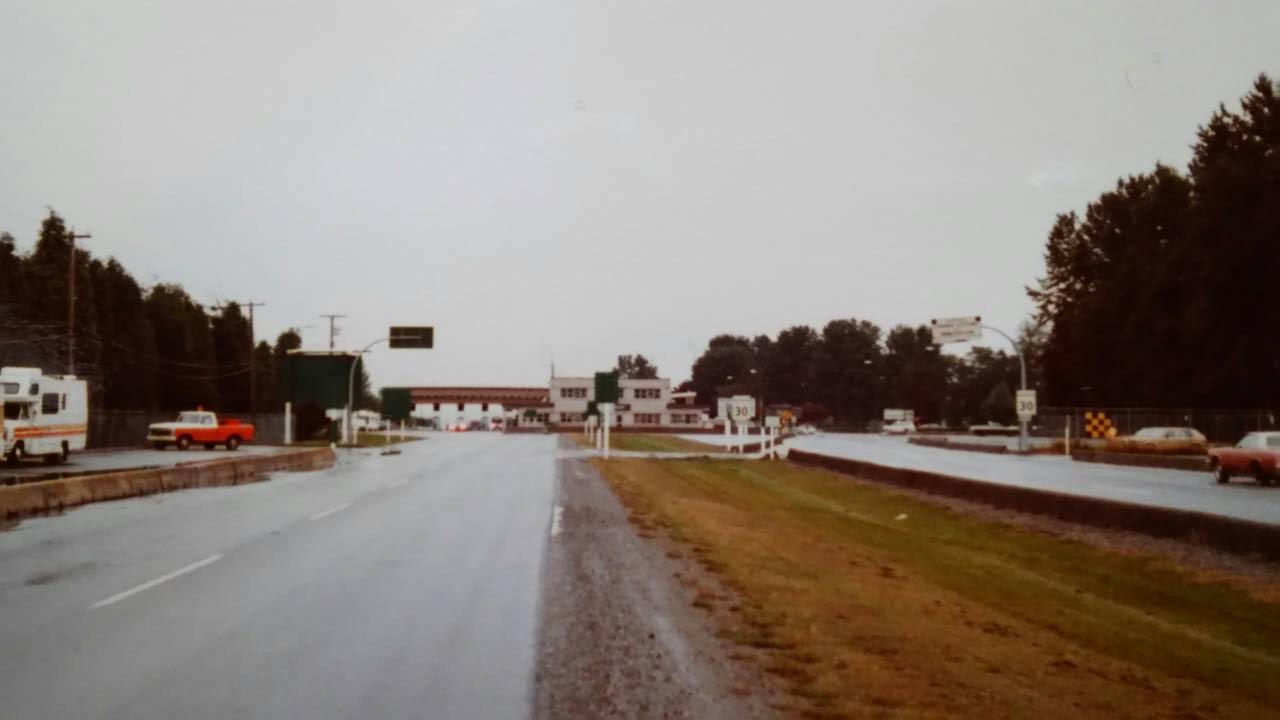
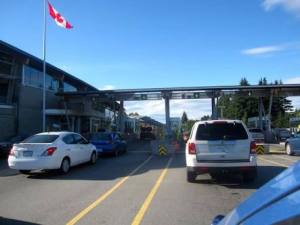 (Photo below: A recent border checkpoint)(下の写真:最近の検問所)
I’m a little nervous about crossing a land border for the first time, but I’m also curious. The exchange between the female officer in the booth and the driver takes less than a minute; it’s over surprisingly quickly, and the car drives right through.
I hear the officer’s voice: “Do you have any guns, raw vegetables, alcohol, or cigarettes?”
It’s my turn.
“I have one pack of cigarettes, but nothing else.”
After I answered, the officer told me to go to the adjacent building for immigration screening. Apparently, they conduct immigration checks on everyone except Canadians and Americans.
To make it immediately clear that I was on a bicycle trip, I deliberately moved my bike to a spot visible from inside the building and entered with only my passport.
After answering questions about my cash on hand, destination, and whether I had a plane ticket, I was granted a three-month entry permit.
Obtaining Visas Abroad
Unlike today, in 1982, a visa was required even for tourism in the United States. I obtained my U.S. visa in Japan, but for other countries in Europe and Africa that required visas, I handled the procedures at the embassies or consulates of neighboring countries.
Conditions vary—some are paid, some free, and some have expiration dates—but since there is heavy traffic between neighboring countries, the process is usually smooth. In the best-case scenario, visas were issued on the spot; more often than not, if I applied in the morning, I would receive it a few hours later, such as in the afternoon.
At that time, U.S. tourist visas were valid for three months. While it was possible to extend my stay if my application was approved by the local immigration office, I found the process to be a hassle.
I figured I could solve the three-month issue by including the Canadian Rockies and Niagara Falls—places I wanted to visit—in my itinerary and traveling back and forth across the U.S.-Canada border.
Next → The City of Vancouver
初めての陸続きの国境超えに少し緊張ぎみですが、同時に興味もあります。ボックスの中の女性係官とドライバーのやり取りは1分足らず、以外にあっさり終了すると、車は走り抜けて行きます。
係官の声が聞こえてきました。「ガン、生野菜、アルコール、タバコを持っているか?」
私の順番になりました。
「タバコを1箱、それ以外は持っていません」
そう答えると、隣接する建物で入国審査を受けるように係官に言われました。どうやら、カナダ人とアメリカ人以外は入国審査を行うようです。
自転車旅行とすぐにわかるように、あえて建物の中から見える場所に自転車を移動し、パスポートだけ持って建物に入って行きました。
所持金、目的地、飛行機の切符の有無などの質問に答えると、3ヵ月の入国を許可されました。
海外でのビザの取得
現在とは異なり、1982年当時のアメリカは観光にもビザが必要でした。アメリカのビザは日本で取得しましたが、その他、ヨーロッパやアフリカの国でビザが必要な場合は、隣国の大使館や領事館で手続きを行いました。
有料・無料、有効期限の有無など、条件はさまざまですが、隣国の場合は人の往来が多い分、手続きはスムーズです。早い場合はその場で、午前に申請して午後など、数時間後に発給されることがほとんどです。
当時のアメリカの観光ビザは有効期限が3ヵ月です。現地の移民局で申請が認められれば、滞在の延長も可能ですが、私には煩わしく感じられました。
行ってみたいカナディアンロッキーとナイヤガラ瀑布をコースに入れて、アメリカとカナダの国境を行き来することで、3ヵ月の問題は解決できると考えていました。
Leave a Reply