
I bought a map of Morocco and headed for Tangier. The road along the coastline seemed to be cut off, so I had to detour south, cross a mountain, and then rejoin the coastline.
The Arabic that caught my eye—those squiggly characters written from right to left—made no sense at all; I was completely lost. However, I was saved by the fact that road signs always included the place names in the Latin alphabet as well.
As we started driving south along the Mediterranean coast, the blue sky opened up before we knew it, and the wind had died down considerably.
“We’re driving through Africa right now. Isn’t that exciting, H-san?”
“Yeah, it’s nice. But since we don’t know what lies ahead, let’s just make safety our top priority.”
“Got it~”
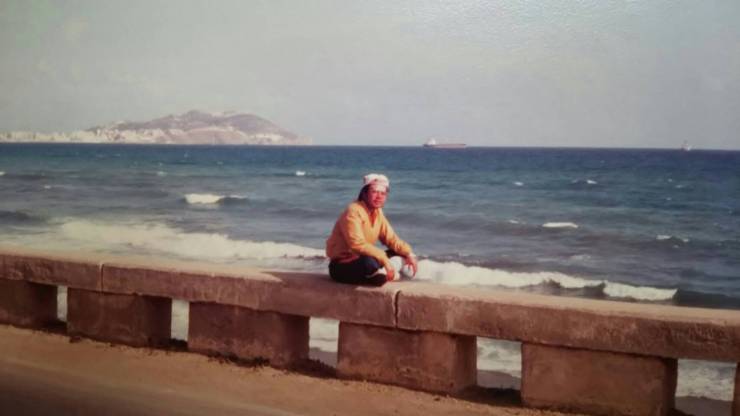
While taking a break, I snapped a photo with the port of Ceuta and the ships crisscrossing the Mediterranean in the background.
モロッコの地図を購入してタンジールへ向かいます。海岸線を行く道は途切れているようで、一度南へ回り、ひと山越えて、再び海岸線に出なくてはなりません。
目に飛び込むアラビア語は右から左へのクネクネ文字でチンプンカンプン、完全にアウトです。ただ、道路標識だけは必ずアルファベットで地名が併記されているので助かりました。
地中海沿いを南へ走り出すと、いつの間にか青空が広がり、風もだいぶ収まってきました。
「僕ら、いまアフリカを走ってるんですよ。ワクワクしませんか? Hさん」
「うん。いいね。でもこの先何があるかわからないから、とにかく安全第一で行くよ」
「了解で~す」
ひと休みしながら、セウタの港と地中海を行き交う船をバックに写真を1枚撮ってみました。
Camping overnight with the Coast Guard?
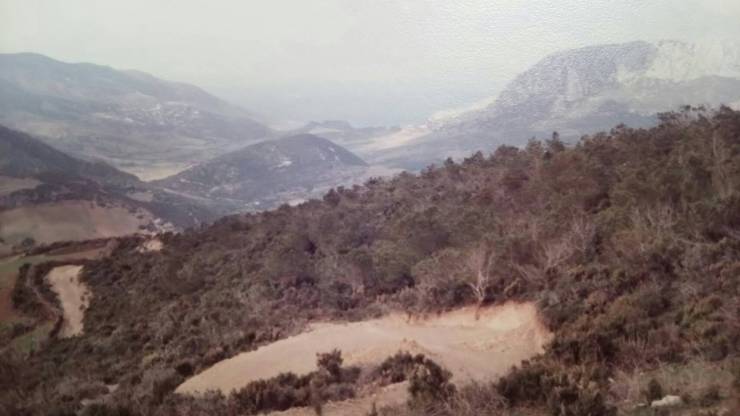
Crossing the mountains for the first time in a while felt like a real challenge. When I looked back partway through, I could see the city of Ceuta jutting out into the Mediterranean, looking quite small. It looked like there was still quite a ways to go before reaching the pass.
When the descent finally began and the view opened up, I could see that the winding road led all the way down to the sea.
海岸警備兵と一緒に一晩キャンプ?
久しぶりの山越えはハードに感じられました。途中で振り返ると地中海に突き出たセウタの街が小さく見えています。この先峠まではまだだいぶありそうです。
やっと下りが始まり視界が開けると、つづら折りの下りの先が海へとつながっているのがわかりました。
“Should we set up our tent down below today?”
“Yeah, that sounds good. The climb up was pretty tough.”
We set up our tent on the beach, and after dinner, as the two of us were taking a smoke break, we noticed two flashlights approaching from behind some rocks a few dozen meters away, heading straight for our campfire. We felt a momentary jolt of tension, but judging by their silhouettes cast by the campfire’s glow, they appeared to be young soldiers (Morocco had mandatory military service at the time, though it was abolished in 2006). They were shining their flashlights on our faces and saying something.
When W-kun told them in Spanish and English, “We’re Japanese travelers,” they seemed to understand. The two were coast guard soldiers, apparently on an all-night patrol; this sandy beach was likely their patrol post, and it seemed we’d just happened to pop up and intrude on their territory. Sleeping under the watchful eye (?) of the coast guard—it might not get any safer than this.
A pleasant aroma began to waft over. As we started getting ready for bed, one of the soldiers began making coffee with hot water he’d boiled. Then, to our surprise, the other soldier pulled out some hashish. He asked us, “Want some?” but of course, we declined. It certainly seemed like a very laid-back patrol.
Next → Morocco and Hashish
「今日は下ったところでテントを張ろうか?」
「そうですね。登りは結構ハードでしたから」
浜辺にテントを張り、食後二人で一服していると、数十メートル離れた岩影からライトが二つ、私たちのたき火を目標に近づいてくるのがわかりました。一瞬緊張が走りましたが、たき火のあかりに浮かび出された姿からすると若い兵士(当時のモロッコには兵役がありましたが、2006年に廃止されました)のようです。私達の顔をライトで照らしながら何か言っています。
W君がスペイン語と英語で「日本人の旅行者だ」と伝えると、どうやら理解したようです。二人は沿岸警備兵、夜通しの警備にあたるようで、おそらくこの砂浜は彼らの警備ポイント、そこへひょっこり私達がオジャマしたようです。警備兵に守られて(?)の野宿、こんな安全なことはないかもしれません。
何やらいい香りがしてきました。寝支度を始めた私達のそばで、一人の兵士が沸かしたお湯でコーヒーをいれ始めたようです。すると、もう一人の兵士は何とハッシッシを取り出しました。私たちに向かって「やるか?」と聞いてきましたが、当然断りました。どうにも気楽な警備のようです。
One Reply to “”