North America [14]: Reunion with Paula

Before arriving in Seattle, I called Ms. Paula’s parents’ house and asked her father for her and Jeff’s phone numbers.

On my second day in Seattle, I changed into my best (?) pair of cotton pants, a white shirt, and a vest (unfortunately, my shoes were dirty) and had dinner with Ms. Paula at a restaurant. It was our first reunion in three and a half months. I gave her a bottle of sake I’d bought in Seattle as a souvenir.

シアトルに着く前にパウラ先生の実家に電話をして、親父さんに先生とジェフの電話番号を聞きました。

シアトル滞在2日目、私は一張羅(?)のコットンパンツに白いシャツ、そしてベストに着替え(残念ながら、靴は汚れていました)パウラ先生とレストランで夕食を。3ヵ月半ぶりの再会です。私はシアトルで購入した日本酒をお土産代わりにプレゼントしました。

imageSeattle in the 1980s  

“H, you look well. How’s it going in the U.S.?”

“Yes, Ms. Paula. It’s been a month and a half since I left LA, and I’ve somehow made it this far. I mean, I’m amazed by the sheer scale of nature here in America. Also, the canned drinks and hamburgers are bigger than in Japan. Actually, I think everything is bigger here.”

“I know, right? The U.S. is huge, so if it gets cold, you should head to Florida. It’s warm there. Also, please don’t call me ‘Sensei’—call me Paula. So, how’s your conversation going? Are you pronouncing ‘light’ and ‘right’ distinctly?”

“Haha. Sensei—I mean, Paula—isn’t that the very thing you’ve always been telling me to watch out for? And I’m not going to Florida. From New York, I’m heading to Europe. As for conversation, I think I can manage basic communication, but I still can’t handle difficult words.”

“Is that so? For example?”

“The other day, I didn’t know the word for ‘cancer’…”

“Oh, ‘cancer,’ right? And?”

“Yeah, I found out later, but it seems the person was asking, ‘Why do Japanese people have so few cases of skin cancer?’ In the end, the conversation just fell flat.”

“That happened to me a lot in Japan, too. You just have to learn difficult words little by little.”

“That’s true. By the way, how’s Paula?”

“I started working right after I got back. Um, Shinjin?”

“Newcomer? Recruit?”

“Yes, that’s it. Since I’m new, I’m very busy. I get up at 4:30 every morning.”

“That’s tough. Please don’t burn yourself out.”

Paula seemed to be enjoying speaking Japanese again after so long. When we left the restaurant, she gave me a T-shirt as a thank-you for the sake. When I picked out a T-shirt with ‘Seattle’ printed large on the chest,

“Seattle is the name of an Indian chief. He was a great man.”

“Really? A great man? I’d like to follow in his footsteps.”

“Follow in his footsteps? What do you mean…”

Just as he said that, Paula suddenly

“Oh, no. I’m sorry, H.”

Last bus

“The last bus? It’s the last one.”

“The last one? What time is it?”

“8:30.”

I looked at my watch; there were less than 10 minutes left.

“Will we make it? Is the bus stop close?”

“I think we’ll probably be okay.”

After hurriedly settling the bill, Paula said,

“Well then, H. Have a safe trip…”

Interrupting her, I said,

“No, no, I’ll walk you to the bus stop. Come on, let’s go. Hurry!”

Before we knew it, the two of us were jogging down Seattle’s main street, which was still bustling with people. We must have run for nearly three minutes when Paula spotted the bus and, looking relieved, said,

“Phew, phew, oh, O.K. It’s all right now. We made it.”

“R-really? You made it? That’s a relief.”

Both of us were completely out of breath. After a moment, when we’d caught our breath, Paula said,

“H, thank you for the meal today. Please continue your journey in good health. I’ll give my brother a call.”

“Yes, please do.”

As Paula stepped onto the bus, the doors closed immediately, and it pulled away. I waved back at her, who was waving from inside the bus, and saw her off.

Next → Meeting Jeff

「Hさん、元気そうですね。アメリカはどうですか?」
「はい、先生。ロスから1ヵ月半、何とかここまで来ました。いや、アメリカの自然の大きさには驚いています。あと缶ジュースやハンバーガーも日本に比べると大きいですね。いや、何でも大きいと思います」

「そうでしょ。アメリカは広いですから、寒くなったらフロリダへ行くといいです。暖かいですよ。それから先生じゃなくて、パウラと呼んでください。で、会話の方はどうですか?  ”light”と”right”は、ちゃんと区別して発音してますか」

「あっはは。先生それ、いや、パウラがいつも私に注意していたヤツじゃないですか。それにフロリダには行きません。ニューヨークからはヨーロッパです。会話のほうは、最低限のコミュニケーションは取れてると思いますけど、難しい単語はやっぱりダメです」

「そうですか。例えば?」
「この間も’癌’という言葉がわからなくて」
「オー、’cancer’ですね。それで?」
「ええ、後でわかったんですが、相手は〔日本人は、どうして皮膚癌が少ないのか?〕と聞いていたようです。そのときは結局、会話が途切れてしまいました」

「私も日本でよくありましたよ。難しい言葉は少しずつ覚えるしかないです」
「そうですね。ところでパウラは?」
「私は、帰国してすぐ働いています。えーとシンジン?」
“newcomer? recruit?”
「はい、それです。新人ですから、とても忙しいです。毎朝4時半に起きています」
「それは大変だ。倒れないでくださいね」

先生も久々の日本語の会話が楽しそうでした。レストランを出ると、日本酒のお礼だと言って、Tシャツをプレゼントしてくれました。胸に大きくシアトルとプリントされたTシャツを選ぶと、

「シアトルはインディアンの酋長の名前です。立派な人です」
「へえー、立派な人ですか。私もあやかりたいです」
「アヤカリタイ? どういう…」
先生は、そう言うといきなり

「Oh, no. ごめんなさい、Hさん」

最終バス

「バスのサイシュウ? 最後?の時間です」
「最終って。何時ですか?」
「8時半です」
時計を見ると、もう10分を切っていました。

「間に合いますか? バス停は近いんですか?」
「たぶん大丈夫だと思いますけど」
慌てて勘定を済ますと、先生は、
「それではHさん。元気で旅を…」
私は言葉をさえぎるように、
「いや、いや、バス停まで送りますよ。さあ、行きましょう。急いで」

いつのまにか2人は、まだ人通りの多いシアトルのメインストリートを小走りに走り始めていました。3分近く走ったでしょうか、先生はバスを見つけると、安心したように、

「ハァー、ハァー、オッ、O.K. もう大丈夫。間に合いました」
「そっ、そっ、そうですか。間に合いましたか、よかった」

2人とも完全に息が上がっていました。しばらくして息が整うと、先生は、
「Hさん、きょうはご馳走さまでした。元気で旅を続けてください。兄に電話しておきます」
「はい、お願いします」

先生がステップを上がると、バスのドアはすぐに締まり、発車していきました。車内で手を振る先生に応え、私も手を振って見送りました。

North American Continent [12]: Heading North again against the Wind

After thanking Grandma for letting me stay so long, I headed to Jim’s shop at 10 AM as promised. I can’t remember the brand, but my European-made tires had arrived.

I replaced both the front and rear tires with the new ones and wrapped the spare tire in my sleeping bag, securing it to the bike rack. They were $14 each, for a total of $42. After I paid, Jim said, “Good luck!” and saw me off.

Oregon seems greener than California. A short distance inland from the coast, vast ranches stretched out, with many cows grazing. After crossing the Columbia River, which originates in the Rocky Mountains, I entered Washington State.

Here, too, I was hit by strong winds. The bridge spanning the river was 4 miles (about 6.4 km) long, curving sharply toward the ocean as it climbed in elevation.

At several dozen meters above sea level, it felt as if I were riding right on top of the ocean. With the wind hitting me head-on, the bike struggled to move forward, and it took a full 40 minutes to cross the bridge.

Leaving Route 101, I headed east across the plateau and merged onto Interstate 5, arriving at Olympia, the capital of Washington State. From here, I’ll continue north on Interstate 5 all the way to Canada.

I immediately went to the Transportation Authority and picked up a cycling map. Now I can see at a glance which sections of Route 5 are off-limits to cyclists, so I can ride to Canada with peace of mind.

People who have cycled across North America [1]

Here are some videos of people who have cycled through the U.S. and Canada. Although there is a “time gap” of over 30 years, there are some commonalities.

Cycling across America [1] Rhino Cam 17

Cycling across America [2] Rhino Cam 18

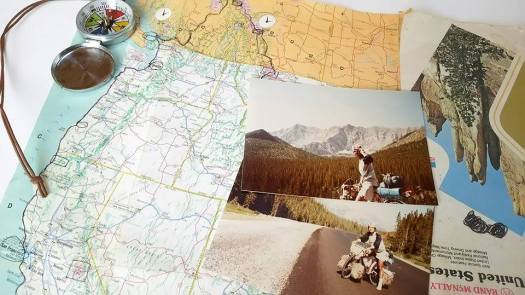
Next → Maps by Rand McNally

お婆ちゃんに長かった宿泊のお礼を言うと、約束の10時にジムのお店へ。メーカー名は忘れましたが、ヨーロッパ製のタイヤが届いていました。

前後輪とも新しいタイヤに替え、スペアの1本は寝袋に巻いて荷台にくくり付けました。1本14$で合計42$。支払いを済ますと、ジムは、”Good luck!”と言って送り出してくれました。

オレゴンはカリフォルニアに比べ緑が多いようです。海岸線を少し離れると広大な牧場がひろがり、多くの牛が放牧されていました。ロッキー山脈を水源とするコロンビア川を渡るとワシントン州です。

ここでも強風の洗礼を受けました。川に架かる橋は4マイル(約6.4㎞)と長く、高度を上げながら海側に大きくカーブしています。

海上から数十メートル、まるで海の上を走っているようです。風をまともに受けて自転車はなかなか前に進まず、渡りきるまで40分もかかりました。

101号線を離れ、東にコースをとり高原を越えると、インターステイトハイウェイ5号線に合流、そこはワシントン州の州都オリンピアです。この先は、この5号線をカナダまで北上します。

さっそく、交通局 (Transportation Authority) へ行き、自転車専用地図を入手しました。これで5号線の自転車乗り入れ禁止区間が一目でわかり、安心してカナダまで行くことができます。

自転車で北米大陸を走った人たち[1]

アメリカやカナダを自転車で走った人たちの映像を紹介します。30年余りの「時差」こそありますが、どこか共通するところがあります。

Cycling across America [1] Rhino Cam 17 

Cycling across America [2] Rhino Cam 18

North America [11]: Moe’s Bicycle Shop

It was Tuesday, so I decided to stop by Moe’s Bike Shop. Unfortunately, the tires hadn’t arrived yet. According to Jim, they were definitely supposed to be there by Thursday morning. I reluctantly headed back to the youth hostel, where the elderly owner called out to me.

“Looks like the tires didn’t make it. Well, that can’t be helped.”

“Yeah, it’s a shame, but they said they’ll be here by Thursday morning.”

I continued, sounding a bit grumpy.

“Everyone else is setting off every morning, but I’m stuck here again. I’m fed up.”

Then the old lady said,

“Your journey is going to be a long one, isn’t it? A day or two won’t make any difference. Besides, they’ll definitely be here by Thursday, right?”

“You’re right. Well, what should I do now? Maybe I’ll go see a movie to kill some time.”

“Oh, that’s a good idea. I hear there’s an interesting movie playing. But don’t be late for dinner.”

The familiar films *E.T.* and *Annie* were showing in Japan. Both had premiered the previous month, and I’d often seen the huge movie billboards along the way. I decided to see the musical *Annie*. It was my first time watching a movie without subtitles, but the ending was truly spectacular.

Next → Heading North Again against the Wind

火曜日になり、Moe’s 自転車店へ行ってみました。残念ながら、タイヤはまだ届いていません。ジムの話しでは木曜日の朝なら間違いなく届いているとのことでした。やむなくユースホステルに戻るとオーナーのお婆ちゃんが声を掛けて来ました。

「タイヤは届いていなかったようだね。まあ、しょうがないね」

「ええ、残念ですけど、木曜日の朝になるそうです」

私は少々愚痴っぽく続けました。
「他の連中は毎朝出発していくけど、私はまたお預けです。まいりました」

すると、お婆ちゃんは
「あんたの旅は、これから長いこと続くんだろ? 1日や2日どうってことないよ。それに木曜日には間違いなく届くんだろ」

「そうですね。さぁて、これからどうしょうかな。ヒマつぶしに映画でも観に行こうかな」

「ああ、それがいい。面白い映画をやってるらしいよ。でも、夕食には遅れないようにね」

日本でもおなじみの〈E.T.〉と〈ANNIE〉が上映中でした。どちらも前月に封切られていて、道すがら映画の巨大看板をよく見ていました。私はミュージカル〈ANNIE〉を観ることに。字幕なしの映画は初めてでしたが、迫力満点のエンディングでした。

image

Click on the photo to see a scene from the movie.

写真をクリックすると、映画の一場面が現われます。

North America [2]: A Holiday in Los Angeles

May 31 (Monday), my second day in Los Angeles, was Memorial Day, a public holiday. Under the “Happy Sunday” system, the holiday was moved from its original date of May 30 to the last Monday in May—a move that creates a long weekend—which is a very American way of thinking.

Sea Fishing at Redondo Beach

That afternoon, at Mr. A’s invitation, the three of us—Mr. A, one of his acquaintances, and I—went sea fishing. It’s only a 20-minute drive to the Pacific Ocean. We launched a boat at Redondo Beach, south of Santa Monica, and started fishing. I had brought my rod and reel with me from Japan. It wasn’t just about cycling; I thought, “Maybe I’ll try casting a line every once in a while.”

Although the rod was shorter than I am and the reel was small enough to fit in the palm of my hand, on my first cast I reeled in a barracuda about 60 cm long. Mr. A and his group caught three bonito. Since four fish were enough, we returned to our friend’s house, where a Japanese-American neighbor joined us, and we started a party with sashimi and grilled fish.

There were many second- and third-generation Japanese-Americans there, and the conversations—where Japanese words occasionally mixed in with English—had a somewhat strange, yet fascinating feel to them.

To Disneyland by Bicycle

ロスに着いて2日目の5月31日(月)はメモリアルデーで休日でした。本来の5月30日をハッピーサンデー制により5月の最終月曜日に、つまり連休にするという、いかにもアメリカらしい考え方です。

レドンドビーチで海釣り

この日は昼から、Aさんに誘われてAさんの知人と私の3人で海釣りに。車で20分も行けばもう太平洋です。サンタモニカの南、レドンドビーチにボートを浮かべて釣り始めました。私は、竿とリールを日本から持参していました。自転車だけではなく「たまには釣糸でも垂れてみるか」そんな気持ちからです。

身長にも満たない短い竿と手のひらに乗るぐらい小さいリールでしたが、最初のヒットで60㎝ほどのバラクーダ(かます)を釣り上げました。Aさんたちはボニート(かつお)を3匹。4匹で十分だということで、知人宅に戻り、ご近所の日系の方も加わり刺身と焼き魚でパーティーが始まりました。2世・3世の方が多く、英語の中にときどき日本語が混ざる会話は何か不思議な感じがしました。

自転車でディズニーランドへ

image

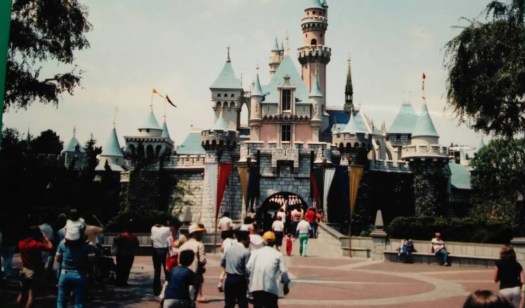
The next day, I headed to Disneyland. It was a round trip of about 100 km, but I treated it as a test ride. Actually, due to some issue with the “Handle with Care” bike bag, the right side of the handlebars had bent inward slightly. This ride was to see if I could cover the 100 km without any discomfort or stress. I figured I’d probably make it, and if not, I’d just swap it out along the way—that was my conclusion.

I was suddenly driving on the right side of the road, which I wasn’t used to, and I almost drifted into the left lane twice while turning corners, but by the time I headed back, I had gotten completely used to it. Disneyland in Los Angeles isn’t as big as I had imagined. What caught my eye were the large numbers of cleaning staff walking around, picking up trash as soon as it was thrown away. Because of this, the park was kept extremely clean.

Next → To San Francisco (1)

翌日はディズニーランドへ。往復100㎞ほどの行程ですが、テスト走行のつもりでした。実は<取扱注意>の輪行袋が何らかのトラブルで、ハンドルの右部分が内側に少し曲がっていました。100㎞の距離を違和感なく、ストレスなく走れるかの試走です。何とか行けるだろう、だめなら途中で取り替えよう、それが結論でした。

いきなりの慣れない右側通行、角を曲がるタイミングで2度ほど左車線へ出そうになりましたが、それでも帰るころにはすっかり慣れていました。ロスのディズニーランドは思っていたほど大きくありません。目についたのは、捨てられたそばからゴミを拾って歩く大勢の清掃スタッフです。そのため園内は非常に綺麗に保たれていました。

North America [1]: To Los Angeles

The passenger flight from Seoul made a stopover at Honolulu Airport for refueling after departing Narita. The immigration check felt stricter than I had expected, but the warm Hawaiian air helped ease my nerves, as I was a bit nervous on my first flight.

At the Los Angeles airport, Mr. A, an expatriate employee introduced to me by a CEO acquaintance, was waiting for me. Mr. A, who is in his mid-30s and older than me, had left his wife in Japan to work here alone. We exchanged greetings, loaded my bike bag and luggage into the back seat, and headed to Mr. A’s home.

“The boss told me about you, H. I hear you’re traveling across America by bike. That’s amazing.” “Well, I’d been thinking about it for a while, but I figured now was the chance.” “I see. Well, you’ve got some preparations to make, so why don’t you just relax at my place while you’re at it? I’m living alone, so don’t worry about it.”

“Thank you so much. Since I’m in LA, I’m planning to go to Disneyland. Also, I’d like to check out the printing and design work here—would that be okay?” “Sure. But I think it’s pretty much the same as in Japan. It’s a three-day weekend starting today, though, so I’ll take you next week.” “Sorry for asking so much of you. I’d really appreciate it.”

Mr. A’s home was in a residential neighborhood called Lawndale, a few kilometers from the airport on the outskirts of Los Angeles, and he had prepared a room for me. Perhaps it was the exhaustion from the long flight, but I slept soundly that night.

ソウル発の旅客機は、成田を発つと給油のためにホノルル空港でトランジットです。入国審査は思いのほか厳しく感じられましたが、ハワイの暖かい空気は初めてのフライトに少々緊張ぎみの私をほぐしてくれました。

ロスの空港には、知人の社長さんに紹介された駐在員のAさんが待っていてくれました。Aさんは奥さんを日本に残して単身赴任、私より年上の30代半ばです。お互い挨拶を交わし、輪行袋と荷物を後部座席へ運び込みAさんの自宅へ向かいました。

「H君のことは社長から聞いているよ。自転車でアメリカ旅行だってね。すごいねぇ」 「いや、前から考えてはいたんですけど、いまがチャンスかなと思って」 「そう。まあ準備とかあるんだろうから、その間、俺の家でゆっくりするといい。一人だから気にすることないよ」

「ありがとうございます。折角のロスだからディズニーランドにも行こうと思っています。あと、こちらの印刷やデザインの現場も見てみたいんですけど、いいですかね?」 「いいよ。でも日本と一緒だと思うよ。ただきょうから3連休だから、来週連れて行くよ」 「無理言ってすいません。お願いします」

Aさんの自宅は、空港から数キロのロス郊外ランダウェルという住宅街にあり、私のために一部屋用意してくれていました。長いフライトの疲れでしょうか、その夜はぐっすりと眠りました。

image

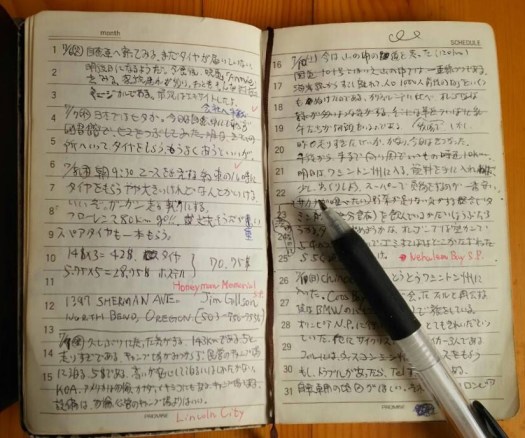
While traveling in North America, I used to jot down brief notes about my daily experiences and thoughts in this notebook. Now, when I read through it, the scenes from that time come back to me as if they were just yesterday.

Next → A Holiday in Los Angeles

北米を旅行中、この手帳に日々のできごとや感じたことを短かく記録していた。いま、この手帳を読むと、当時の光景がきのうのことのようによみがえる。

Travel Preparations [8]: Finally, It’s Time to Leave

Everything was ready. Golden Week had ended, and all that was left was to wait for the tickets. In the meantime, we’d been doing test runs with our actual gear. O called me in mid-May.

“Sorry to keep you waiting. It took a while, but I got the tickets. It’s a Korean Air flight from Narita to Los Angeles, one week from now on May 29.”

“Okay. May 29, then. So when will I get the tickets?”

“No, you’ll pick up the tickets at the airport counter on the day of the flight. I’ll go with you to handle the check-in, so don’t worry.”

“I see. Thanks. Well, I’ll leave it to you then.”

The ticket cost 100,000 yen. Since one-way tickets weren’t available, he said he canceled one leg of a round-trip ticket.

Finally, departure was just one week away. I remember feeling somewhat restless in the days leading up to it.

“I’ll be back safely.”

Since my older sister lived in Abiko, the starting point of the Narita Line, my mother and I decided to stay at her house the night before departure. Since it was a daytime flight, my sister’s family threw a small send-off party that evening. They even started asking for souvenirs before I’d even left.

The next day, I met up with O, and the seven of us—including my mother, my sister’s family, and myself—headed to Narita Airport. Unlike the night before, time passed quietly on the train.

When we arrived at the airport lobby, O took care of all the check-in procedures at the counter. My checked luggage consisted of two bundles: one containing a bike bag labeled “Handle with Care” and another containing four side bags with various items. With just one front bag slung over my shoulder, I suddenly felt much lighter.

We chatted over tea for a while until boarding began. Perhaps my mother was worried about me after all; she seemed rather quiet. Eventually, it was time to board. I made a point of greeting everyone cheerfully, and finally, as we shook hands, I expressed my gratitude to O.

As I descended the stairs toward the boarding gate, I heard my mother calling my name from behind. I raised my right hand slightly in response, but I couldn’t bring myself to look back.

“It’s okay. I’ll definitely come back safely.”

Next → 9,700 km across North America[1]: To Los Angeles

すべて準備は整いました。ゴールデンウィークも終わり、あとはチケット待ちになりました。その間、実際の装備でテスト走行も行っていました。O氏から電話があったのは、5月半ば過ぎです。

「お待たせ。遅くなったけど、チケット取れたぞ。1週間後の5月29日、大韓航空機 成田発ロス行だ」
「うん。5月29日だな。それでチケットはいつもらえるんだ」
「いや、チケットは、当日空港のカウンターで受け取るんだ。俺が一緒に行って手続きするから、心配はいらない」
「そうか、ありがとう。じゃあ、それで頼むよ」

チケット代金は10万円でした。片道チケットが入手できないので、往復チケットの片道をキャンセルしたそうです。
いよいよ1週間後に出発です。それからは何となく落ち着かない日が続いたのを覚えています。

無事に帰るから

姉が、成田線の起点の我孫子(あびこ)に住んでいたこともあり、出発の前日は母親と一緒に姉の家にやっかいになることに。昼の便ということもあり、その夜は姉家族によるミニ壮行会となりました。早くもおみやげの催促まで出る始末でした。

翌日、O氏と待ち合わせ、母親と姉家族そして私を含めた7人で成田空港にむかいました。前夜とは違って、電車内では静かに時間が過ぎていきました。

空港ロビーに着くと、O氏がカウンターですべての手続きを済ませてくれました。預けた荷物は〈取扱注意〉の貼られた輪行袋ともろもろ入った四つのサイドバッグを束ねた計二つ。私は、肩から下げた手荷物のフロントバッグが一つと、急に身軽になりました。

搭乗開始までのしばらくの間、お茶を飲みながら雑談をしていました。母親はやはり私のことが心配なのでしょうか、口数が少ないようでした。やがて、搭乗開始の時間になりました。私は努めて明るく皆とあいさつを交わし、最後に握手をしながら一連のお礼をO氏に伝えました。

搭乗口に向かう階段を降りていく私のうしろから、母親が私の名を呼ぶ声が聞こえてきました。右手を軽くあげて応えましたが、振り返ることはできませんでした。

「大丈夫。きっと無事に帰るから」

joyscycle20160122h

From here on, I’ll be embarking on a cross-country journey across the North American Continent, starting in Los Angeles. I’d like to share some highlights from my trek through the Rocky Mountains.

この先は、ロスから始まるアメリカ大陸横断です。ロッキー山脈縦走のようすなどを紹介したいと思います。

Travel Preparations [7]: Final Preparations

I think it was around mid-April. I got a call from O.
“I’ve sorted out the tickets. It’ll be right after Golden Week. You can’t get cheap tickets during peak season.”
“Got it. That’s what I was planning on anyway. I’m not in a rush, so I’ll leave it to you.”

After hanging up, I really felt that my departure was finally approaching. After that, I proceeded with my preparations: applying for a passport, obtaining a U.S. visitor visa, and getting a youth hostel membership card. Nowadays, a credit card is all you need for overseas travel, but back then, for safety reasons, traveler’s checks were the norm. Since they couldn’t be cashed without signing at a bank counter, there was no risk of theft.

Overseas tourism was first permitted in 1964 (Showa 39), the year the Tokyo Olympics were held. The maximum amount allowed to be taken out of the country at that time was $500. The restrictions were gradually eased afterward and eventually abolished. After the Worldwar II, the exchange rate of 360 yen to the dollar persisted for a long time, but by the 1980s—about ten years after the transition to a floating exchange rate system—the rate had settled in the 200-yen range per dollar.

I prepared $10,000 in traveler’s checks for my travel expenses. At the exchange rate in 1982, when I departed, that was equivalent to about 2.4 million yen. Cycling trips naturally involve sleeping outdoors while traveling, but I had decided to stay at a hotel once a week. I believed that taking a shower, doing laundry, and eating a proper meal would refresh me and allow me to continue my journey.

Of course, I also intended to do some sightseeing whenever I arrived at tourist destinations. To that end, I made sure to set aside enough travel funds, figuring I could simply bring any remaining money back home. Incidentally, the traveler’s checks I had prepared were issued by Bank of America, but some banks in Europe and North Africa didn’t accept them, which caused me some trouble in smaller towns. It seems they weren’t very widely accepted.

Next → Travel Preparations [8]: Finally, It’s Time to Leave 

4月の中ごろだったと思います。O氏から電話で連絡がありました。

「チケットの件、話しをつけといたぞ。ゴールデンウィークあけだな。ピーク時は安いチケットは取れないから」
「わかった。そのつもりでいる。別に急いでないし、まかせる」

受話器を切った後、いよいよ出発が近づいたことを実感しました。
その後は、パスポートの申請、アメリカの滞在ビザ、ユースホステルの会員証の取得と準備を進めていきました。

今では、海外旅行はカードがあればこと足りますが、当時は海外旅行といえば、安全面からトラベラーズチェックが当たり前でした。金融機関の窓口でサインをしない限り現金化されませんから、盗難のリスクがありません。

東京オリンピックが開催された1964年(昭和39年)に海外観光旅行が解禁されました。その時の持ち出し限度額は500ドルです。その後徐々に緩和され、やがて制限は撤廃されました。戦後、1ドル=360円のレートが長い間続きましたが、変動相場制に移行して10年ほど経過した1980年代には1ドル=200円代のレートで推移していました。

旅費としてトラベラーズチェックで1万ドル用意しました。私が出発した1982年当時のレートで約240万円です。自転車旅行は当然、野宿をしながらの移動になりますが、週に1回は宿に泊まると決めていました。シャワーを浴び、洗濯をし、普通に食事をとればリフレッシュして、また旅が続けられると思っていました。

もちろん、観光地に着けばふつうに観光もするつもりでした。そのためにも旅費は十分に用意し、その上で残った旅費は、持って帰ればいいと考えていました。ところで、私が用意したトラベラーズチェックは Bank of America の発行でしたが、ヨーロッパや北アフリカでは扱わない銀行もあり、地方の町では困ったこともありました。あまりメジャーではなかったようです。

Travel Preparations [6]: Leopard Camping

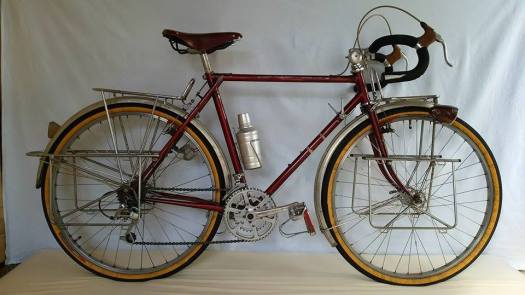
As soon as April arrived, I went to pick up the touring bike I had ordered. Friend Shokai’s touring bikes are built with durability as the top priority.

・Frame: Tange Champion No. 2
・Handlebar: Nitto Grandlandner 132, 350 mm
・Stem: Technomic
・Brakes: Mafac Criterium (Cantilever) Yoshigai Dia-Compe 162
・Saddle: Brooks Standard
・Hubs: Shimano Large Flange Quick Release
・Rims: Super Champion 650B
・Chainring: Sugino Super Maxi Triple 48/42/36T
・Shifters: (Front) Maeda Suntour VX (Rear) Shimano Diore
・Rack: Friend Original
・Weight: 15 kg

Built with all-around well-regarded parts, including Tange’s frame tubes—known for their strength—as well as Mafac and Super Champion components.

By this time, the overlock nut spacing had expanded from 120 mm to 126 mm, and a 3-speed front/6-speed rear (18-speed total) drivetrain had become standard equipment on touring bikes. Notable features included the stylish top tube lugs and the dual lighting system consisting of a dynamo lamp and a flashlight. The price, including accessories, was 160,000 yen.

4月になり、さっそく私は、オーダーしたキャンピング車を引き取りに行きました。フレンド商会のキャンピング車は、第一に頑丈さを考えて作られています。

・フレーム 丹下チャンピオン no. 2
・ハンドル 日東グランドランドナー 132  350㎜
・ステム テクノミック
・ブレーキ マファック・クリテウム(カンティ)  吉貝ダイアコンペ 162
・サドル ブルックススタンダード
・ハブ シマノ ラージフランジ・クィック レリーズ
・リム スーパーチャンピオン 650B
・チェーンホイール 杉野スーパーマキシィ  トリプル 48・42・36T
・変速機 (前)マエダ サンツアーVX  (後)シマノ ディオーレ
・キャリア フレンドオリジナル
・重量 15kg

強さで知られる丹下のフレームチューブを始め、マファック、スーパーチャンピオンなど全て定評のあるパーツで組まれています。

このころになると、オーバーロックナット寸法が120㎜から126㎜に広がり、前3×後6=18段がキャンピング車の標準装備になりました。目を引いたのは、ちょっとお洒落なトップチューブのラグ、ダイナモランプと懐中電灯のダブルライトです。価格は備品を含めて16万円でした。

joyscycle20160122e

As for this Leopard Camping bike, even now, 34 years (as of 2016) after I bought it, it’s still going strong just like the Cherubim Road. Since I gave my SEOS bike-packing bike to a friend, I removed the rack and it’s now serving as my bike-packing bike. Aside from consumables—such as replacing the chain and freewheel when they skipped—and changing the saddle twice, all other parts are still the originals.

I’ve only had two mishaps while traveling abroad. One was when the weld on the rear rack broke (which I had re-welded locally), and the other—though I think it was my own fault—was when the lock nut or bearing retainer on the headset came loose, causing the upper ball joint to become worn out. This made the bike veer to the left whenever I let go of the handlebars. However, since it didn’t cause any problems as long as I kept my hands on the bars, and since I was nearing the end of my trip, I decided to repair it after returning home.

I decided to ride it back home from the shop. As I pedaled, I thought to my new partner, with whom I’d shared both hardships and joys, “I’m counting on you from here on out.” Its smooth ride, which didn’t feel heavy at all, seemed to be responding to my thoughts.

Next → Travel Preparations [7]: Final Preparations

このレパード・キャンピングですが、購入から34年経った今もケルビム・ロード同様、まだ現役でがんばっています。SEOS輪行車を知人に譲りましたので、キャリアを外して輪行車としても活躍中です。消耗品を除くと、歯飛び時のチェーンとフリーの交換、そしてサドルを2回替えたぐらいで、その他のパーツはオリジナルのままです。

海外旅行中もアクシデントは2回だけでした。リアキャリアの溶接部が破損した(現地で溶接し直す)ことと、もう一つは私のミスだと思いますが、ヘッドのロックナットか玉押しの締め付けが緩く、上ワンが虫食い状態になり、手離し走行中に左にヨレるようになりました。ただ、手を離さない限り支障がないので、旅の終盤ということもあり、帰国後に修理しました。

ショップから自宅まで自走して帰ることに。私は、苦楽を共にする新しい相棒に「この先よろしく頼む」――そんな思いでベダルを踏みました。重さを感じさせないスムーズな走りは、それに応えてくれているようでした。

Travel Preparations [5]: Arranging Tickets

A few days after our chance reunion, I had dinner with O. With a few drinks flowing, the conversation really got going. In the midst of it all,

“Actually, I’m quitting my job at the end of this month to go on a cycling trip abroad. I’m planning to start in the U.S.,” I said,
“At the end of this month? That’s soon. Wow, by bicycle, huh? So, what about plane tickets and stuff? My previous job…”

I knew his current job involved interpreting and translation at a company that organizes international conferences. But that was the first time I heard he used to work for an airline.

“Huh? What? So, can you get me a ticket? A cheap one?”
“Yeah, I think I can. I’ve got connections. Well, the only thing left is when you want to leave. So, when would you like to go?”
“When? I still have to get ready, so probably in a month or two. And the bike I ordered is still…”

Just as I was about to say that,
“Wait a minute, so that’s it, is it? No, I saw it at Friend Shokai. The burgundy camper van. I was wondering if the name on the ‘Sold’ sign might be yours.”

He lived in Asagaya, and apparently, he’d spotted it when he dropped by the shop on a whim. He told me he’d actually ordered a touring bike there himself.
And so, with him kindly agreeing to arrange the tickets, another piece of the puzzle fell into place.

Next → Travel Preparations [6]: Leopard Camping

偶然の再会から数日後、O氏と晩飯を。酒も入り、会話は盛り上がりました。そんな中、

「いや、俺、今月一杯で会社をやめて、自転車で海外旅行するんだ。最初はアメリカへ行くつもりなんだ」と私が話すと、
「今月一杯? もうすぐじゃないか。へぇー自転車でとはなぁ。それで、飛行機のチケットとかどうなの? 俺、前の仕事が……」

現在の彼の仕事が、通訳や翻訳など、国際会議を運営する会社だということは知っていました。ただ、そのとき初めて、航空会社に勤めていたことを聞きました。

「えっ、何、じゃぁチケット頼めるの、安いヤツ」
「うん、大丈夫だと思う。ツテはある。そうだな、あとはいつ出発したいかだよ。で、いつがいいんだ」
「いつって、まだ準備もあるし、1-2ヵ月先だろうな。頼んだ自転車だって、まだ……」

そう言いかけたときでした。

「あれっ、やっぱりあれ、そうか。いや、フレンド商会で見たんだよ。ボルドー色のキャンピング車。売約済のプレートの名前、ひょっとして、お前じゃないかと思っていたんだ」

阿佐ヶ谷に住んでいた彼は、どうやら、フラッとお店に寄ったときに見かけたようでした。自身もランドナーをオーダーしたことがあるそうです。

こうして、彼が快くチケットの手配を引き受けてくれたことで、また一つ準備が整いました。

Travel Preparations [4]: A Miraculous(?) Reunion

Even though it was a holiday afternoon, the train was relatively crowded. As I held onto the overhead strap and gazed blankly out the window,

“Excuse me, but, aren’t you H? …From Ogichu(Ogikubo Junior High School)?”
Suddenly, a man’s voice came from my side, as if he were peering in,
“Whoa! It’s O!! No way, no way, no way—you gave me quite a scare. I never expected to run into you here. How many years has it been?”
My loud voice caused a few people around us to turn and look, wondering what was going on.

“It’s been since we graduated junior high school, so it’s been over 15 years, I guess. I’ve been watching you for a while now, thinking you looked a lot like H.”
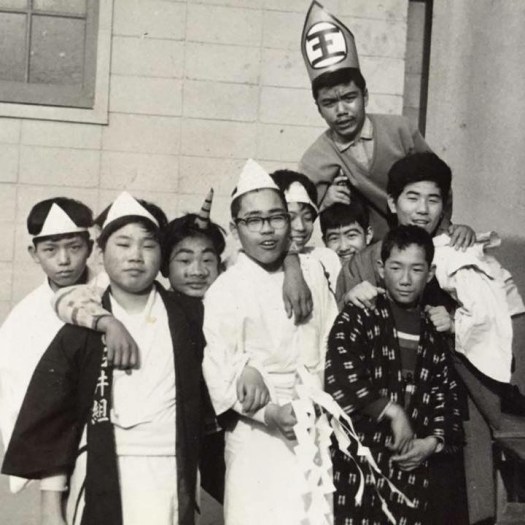
O and I were in the same class for our first and second years of junior high school. We’d never called each other by our first names. He probably used the honorific “-kun” just in case he’d mistaken me for someone else. But for two guys who aren’t exactly handsome, there was no need for that worry. Once you see our faces, there’s no mistaking them. [Photo: Performers at the first-year junior high school cultural festival; H is top right, O is third from the left]

休日の午後だというのに、電車内は比較的混んでいました。つり革をつかんで、窓の外をぼんやりながめていると、

「あのー。失礼ですがH君じゃないでしょうか? 荻中の」

突然、横からのぞき込むように、男の声が、

「おおーっ。Oか!! イヤイヤイヤ、びっくりしたよ。こんな所で会うとはなぁ。何年ぶりだ?」

私の大きな声に、まわりの数人が何ごとかと振り向きました。

「中学卒業以来だから、15年以上は経つだろうな。さっきからHに似ているなと思って、見ていたんだ」

Oとは中学校時代、1-2年同じクラスでした。おたがい、クン付けで呼んだことなどありません。おそらく人違いの場合を考えて、クン付けで声をかけたのでしょう。男前ではない2人には、そんな心配は無用です。一度見たら間違えようのない顔ですから。[写真:中学1年の学芸会の出演者、右上がH、左から3人目がO]

image

“So, what were you up to?” I asked.
“Well, because of my dad’s job, I went to senior high school in Iwate prefecture. I got into a Tokyo private senior high school, but I never even made it to the entrance ceremony.”
“I see. Iwate, huh?”
“Yeah. A place called Mizusawa in Iwate. I came back to Tokyo during my senior year and transferred to a different high school. It was only for a year, though. I’ve been here ever since I started college.”
“Wow, that must’ve been pretty tough. So…”

Just as I started to say that,

“Sorry, H, I’m getting off here.”
“Huh? Here? You mean Asagaya? I’m getting off at Higashi-Koganei.”

With that, we hurriedly exchanged business cards.

“Let’s get together sometime soon.”
“Yeah, sure. I’ll be in touch.”

It was just a conversation during a single train stop, but the afterglow of it lingered until I got off a few stops later.

Next → MTB buddies

「で、どうしてたんだよ?」と、私が尋ねると、
「いや、おやじの仕事の都合で高校は岩手に行ったんだ。都立には受かったんだけど、入学式にも出ずじまいだ」
「そうか。岩手か」
「うん。岩手の水沢って所だ。高校3年の時にまた東京に戻ってきて別の高校に編入した。1年だけな。大学からはずっとこっちだ」
「へぇー、結構大変だったんだな。で…」

私がそう言いかけると、

「悪い、H、俺ここなんだ」
「えっ、ここって阿佐ヶ谷なの? 俺は東小金井だ」

そう言うと、たがいに、あわてて名刺交換をしました。

「近いうちに、会おうぜ」
「うん、わかった。連絡するよ」

たったひと駅のあいだの会話でしたが、その余韻は、私が下車する数駅先まで続きました。

Travel Preparations [3]: At an English conversation school

In March, I started attending an English conversation class after work. It was a one-month course, twice a week. It might seem a bit late in the game, but I wanted to get used to listening to English. There were three students, including me, and our teacher was Paula Layton, an American woman younger than me. During a class where we discussed “Why are you learning English?”, I explained that I wanted to travel abroad by bicycle. Then Ms. Paula said,

“My brother cycled across the American continent. You should definitely stop by to see him; I’ll let him know you’re coming.”
“Really? I’d be very happy if you could do that,” I replied.
“My brother lives in a town called Bellingham, south of Vancouver, near the Canadian border.”
“So, when are you leaving?”
“Yes, I think it will be in two or three months.”
“I see. Well, that’s fine. I’m returning to the U.S. next month, and my parents live in Seattle. Please contact them there. That address is permanent.”

With that, she handed me a note with a phone number written on it.
“Thank you, Miss Layton. I’m very happy.”
I thanked her with slightly exaggerated gestures and a bit of a playful tone, and the teacher smiled and gave me a little wink. On the last day of class, we promised to meet again in the U.S.

In addition to this, someone else recommended places for me to visit in Los Angeles and New York. One was the president of a printing company I knew, who offered me a stop at his company’s Los Angeles sales office. The other was a Taiwanese woman who graduated from a design school in Japan and works at the same company. She told me her older sister lives in New York. Having places to visit was reassuring, and rather than feeling lucky, I felt a sense of gratitude.

Next → Travel Preparations [4]:A Miraculous (?) Reunion

3月になって、仕事帰りに英会話教室に通い始めました。週2回、1ヵ月コース。今さらという感じですが、英語のヒアリングに慣れておきたいからです。生徒は私を含め3人で、先生はパウラ(Paula Layton)という、私より若いアメリカ人女性でした。〈英会話を習う理由は?〉という授業があり、私は自転車で海外旅行をしたいと説明しました。するとパウラ先生が、

「私の兄は、自転車でアメリカ大陸を横断しましたよ。ぜひ、兄の所に寄りなさい、あなたのことは話しておきますから」
「本当ですか。そうしてもらえるなら、とても嬉しいです」と、答えました。
「兄は、バンクーバーの南、カナダとの国境に近いベリンハムという町に住んでいます」

「で、いつ出発するんですか」
「はい、2、3ヵ月先になると思います」
「そうですか。それならオーケー。私は来月アメリカに帰りますが、シアトルに両親が住んでいます。そこに連絡してください。そこの住所はパーマネントですから」
そういうと、電話番号の書かれたメモを渡してくれました。

“Thank you, Miss Layton. I’m very happy.”
オーバーぎみのアクションで、少しおどけながらお礼を言うと、先生はニコッと笑って、軽くウィンクしてみせました。最後の授業の日、アメリカでの再会を約束しました。

この他に、別の人からロスアンゼルスとニューヨークの立ち寄り先を紹介してもらいました。知り合いの印刷会社の社長さんに自社のロス営業所を。もう一人は、日本のデザイン学校を卒業して同じ会社で働く同僚の台湾人女性です。彼女のお姉さんがニューヨークに住んでいるということでした。立ち寄り先があるというのは心強く、ラッキーというより感謝の気持ちを抱きました。

Travel Preparations [2]: Ordering a Camping Bike

Next up was ordering the camper van, and I decided to go with Friend Shokai, a long-established shop in Asagaya, Tokyo. At the time, I frequently visited them to buy parts and supplies. In addition to their extensive selection, I appreciated that I could stop by on my way home from work. The shop had a parts section on the first floor and a showroom on the second floor, where their original Leopard camping bike (later renamed) was displayed alongside bikes from other manufacturers. I liked its calm, solid feel and was convinced that if I were to order a camping bike, this was the one.

I feel that camping bikes have evolved in a way that is unique to Japan. Due to the nature of their intended use, strength is essential, so the frame tubes are made slightly thicker, and the frame construction employs a cross-seat stay. The most distinctive feature is the sturdy pipe carrier designed to suspend heavy side bags. It is positioned low to ensure riding stability.

Next → Travel Preparations [3]: At an English conversation school

次はキャンピング車の発注ですが、阿佐ヶ谷にある老舗のフレンド商会に頼むことに。当時、パーツや消耗品などの購入によく利用していました。豊富な品ぞろえに加え、会社帰りに寄れるのも魅力でした。ショップは1階がパーツコーナー、2階が展示コーナーになっており、メーカー車に混じってオリジナルのレパード・キャンピング車(後に名称変更)も展示していました。落ち着いたドッシリとした感じが気に入って、キャンピング車のオーダーならコレだと思っていました。

キャンピング車は日本独自の進化をしたように思います。用途の性格上、強度が求められ、フレームチューブをやや肉厚にし、フレーム組みはクロスシートステイを採用しています。最も特徴的なのが、重いサイドバッグを吊り下げるための丈夫なパイプキャリアです。走行の安定性を図るために低い位置設定になっています。

joyscycle20160122e


Travel Preparations [1]: First, Persuading My Mother

One of the reasons I started this blog was to spark interest among fellow cycling enthusiasts and hopefully provide some useful insights. That said, please understand that when I share travel anecdotes or reminisce about the past, the topics may stray a bit from cycling. Much of the content also covers events from over 30 years ago (as of 2016), so I expect many things have changed since then.

First, Persuading My Mother

Having decided to travel abroad, I felt a sense of relief, and for some reason, I had a feeling that everything would work out from there. At the time, I was working at a production company in the printing industry. Since it was a company with fewer than 20 employees, I understood all too well how difficult things would become if even one person were to leave. So, wanting to give as much notice as possible, I informed the company that I intended to resign six months later, in March of the following year.

There is a travelogue on bicycle travel titled *World Pedal Journey (Volumes 1 & 2)* (Saimaru Publishing, 1974) by Ikemoto Motomitsu. Mr. Ikemoto was a pioneer of adventure cycling, and this book chronicles his journey spanning 4 years and 4 months from 1968, during which he traveled 42,000 km across 47 countries. It serves as a sort of bible for young people aiming to travel abroad. I used it as a reference myself.

I began serious preparations after the new year. First, I had to tell my mother. My siblings had all moved out on their own, but as the youngest, I was still single and living with her. My mother was the one who understood my passion for cycling best. She didn’t object, but she seemed worried. That was only natural. After all, I was telling her I was going on my first trip abroad—and by bicycle, no less. To ease her worries even a little, I explained my plan in a convincing manner and made some promises.

First, I told her that now, having passed 30, this was my last chance. Thinking about the future, I limited the trip to two years. The route would take me from North America to Europe and then to North Africa. I promised to call her once a month, send postcards regularly, take enough travel money with me, and be extremely careful to avoid accidents, and so on. I managed to convince my mother. This was right at the start of the New Year.

Next → Travel Preparations [2]: Ordering a Camping Bike

私がブログを始めた理由の一つに、自転車好きの人たちに興味を持ってもらい、何かしらの参考になればという思いがあります。とはいえ、旅のエピソードや想い出話になると、少し自転車から離れますので、ご了承ください。内容も30年以上前の出来事で、現在とは状況が違うことが多々あると思います。

まず母親の説得から

海外旅行を決断して気持ちもスッキリし、なぜか、この先うまくいく気がしました。そのころ、私は印刷関連の制作会社に勤めていました。スタッフが20人にも満たない会社でしたから、1人でも欠けると、何かと大変なのは私自身よく理解していました。そこで、なるべく早めにと思い、会社には半年後の翌年3月に退職したい旨伝えました。

自転車旅行の紀行本に、池本元光著『世界ペダル紀行(上・下)』(サイマル出版 1974年) があります。池本さんはアドベンチャー・サイクリングの先駆者で、この書には1968年から4年4ヵ月かけ47ヵ国、42,000㎞を走破したようすが記されており、海外を目指す若者達のバイブル的な存在です。私も参考にしました。

本格的な準備は、年が明けてから始めました。まずは母親への報告です。兄弟はみな独立していましたが、一番下の私はまだ独身で、母親と二人暮らしでした。私の自転車への思いを一番理解してくれていたのが母親です。反対はしませんでしたが、心配のようでした。当然でしょう。初めての海外旅行、しかも自転車で行くと言うのですから。母親の心配を少しでも軽くするように、もっともらしく計画を説明し、約束事も決めました。

まず、30才を過ぎた今が最後のチャンスであること。先々のことを考えて、期間は2年まで。コースは、北米からヨーロッパ、そして北アフリカ。月に1回は電話をかける。絵はがきをマメに送る。十分な旅費を持っていく。事故には細心の注意を払う、などなど。母親には何とか納得してもらいました。正月早々のことです。

I’d like to go cycling abroad

Between touring on my touring bike and taking my road bike out for its first ride, my enjoyment doubled, and I was living a fulfilling cycling life. However, as I got older, my workload grew heavier than ever before, and against my will, my opportunities to ride gradually dwindled.
Eventually, a thought that had been lingering somewhere in the back of my mind—“Someday, I’d like to go cycling abroad”—began to bubble up. In May 1982, I turned 32. And then, off to a foreign country…

Next → Travel Preparations [1]: First, Persuading My Mother

輪行ランドナーでのツーリング、ロードレーサーでのファーストランと、楽しみは倍増し、充実した自転車ライフを送っていました。しかし、歳を重ねるごとに仕事のウェイトが今まで以上に増え、意に反して、走る機会も徐々に減って行きました。

やがて、どこか頭の隅にあった「いつか、自転車で外国を走ってみたい」そんな思いが沸々とわいてきました。

1982年5月、私は32歳になっていました。そして海外へと……

joyscycle20160122h